
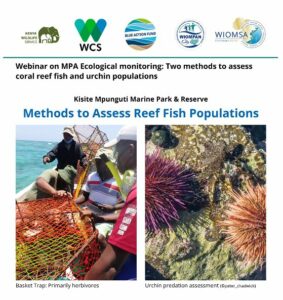
 Marine protected areas (MPAs) play a crucial role in conserving coral reef ecosystems, but effective management requires robust research and monitoring. In the Western Indian Ocean (WIO) region, there is a recognized need for simple, affordable monitoring tools to overcome challenges such as limited funding and capacity. Join us for an insightful webinar where we’ll explore two low-tech methods for assessing coral reef fish and sea urchin populations.
Overview:
Hosted by the Kenya Wildlife Service (KWS) in collaboration with the Wildlife Conservation Society (WCS), the Western Indian Ocean Marine Protected Areas Network (WIOMPAN), and the Western Indian Ocean Marine Science Association (WIOMSA), this webinar aims to share practical methodologies for ecological monitoring in the Kisite/Mpunguti marine park and reserve (KMMPR).
Key Topics:
- Introduction to coral reef monitoring and its importance for MPA management.
- Overview of low-tech methodologies for monitoring fish biomass and sea urchin predation.
- Discussion of the advantages and limitations of these methodologies.
- Insights from the capacity-building efforts at KMMPR.
- Opportunities for collaboration and knowledge-sharing among MPA managers and researchers in the WIO region.
Webinar Details:
Date: 25th March 2024
Time: 1000 HRS EAT
Duration: 90 minutes
Language: English
Who Should Attend:
This webinar is designed for MPA managers, practitioners, coral reef researchers, and anyone interested in marine conservation and management in the Western Indian Ocean region.
Registration:
To register for the webinar and access the event agenda, click here to register online. Don’t miss this opportunity to learn about innovative approaches to coral reef monitoring and contribute to the sustainable management of marine protected areas in the WIO region.
Join Us:
We look forward to welcoming you to this informative webinar and engaging in fruitful discussions on the conservation of coral reef ecosystems. Together, we can build capacity, share knowledge, and work towards a healthier and more resilient marine environment in the Western Indian Ocean.
For inquiries and additional information, please contact deidre@wiomsa.org.
Attachment: WCS flyer