
 Introduction:
The Western Indian Ocean (WIO) is not only a region of unparalleled ecological diversity but also a vital hub for the Blue Economy (BE), offering immense opportunities for sustainable development. Recognizing the need to balance economic growth with environmental conservation, the 4th phase of the Institutional Strengthening for Marine Spatial Planning (MSP) was held in in Zanzibar. This advanced international training program, organized by a consortium of international partners, the Nairobi Convention Secretariat, and WIOMSA, aims to empower national experts and facilitators in the WIO to navigate the complexities of MSP and contribute to a sustainable blue future.
A Journey of Collaboration:
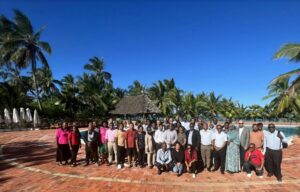
The training program spans four phases, each strategically designed to impart essential knowledge and skills to participants. The journey began in Sweden in February for phase 1, moved to an online platform for phase 2, and continued in Mozambique in April 2023 for phase 3. Phase 4 was hosted in Zanzibar, where 44 national MSP experts and facilitators from Kenya, Tanzania, Zanzibar, Mozambique, Somalia, and Mauritius actively engaged. Each country was represented by five participants and one national facilitator, fostering a collaborative and diverse learning environment.
Day One: Exploring the Blue Economy and MSP’s Role:
The theme of the training revolved around the Blue Economy and the critical role of Marine Spatial Planning. The inaugural day delved into comprehensive discussions, exploring the components of the Blue Economy and assessing the limitations and possibilities of MSP within the participating countries. Zahor El Kharousy, representing the Ministry of Blue Economy and Fisheries in Zanzibar, provided a compelling overview of the Blue Economy in the region, setting the stage for informed discussions and collaborative learning.
Objectives and Impact:
The overarching goal of the training is to build long-term capacity in MSP within the WIO. The program seeks to strengthen national and regional collaboration platforms, fostering networking cooperation for MSP development. By enhancing the ability of participants to collaborate across sectoral boundaries, the training aims to break down silos and promote holistic, goal-driven spatial planning.
Moreover, the program emphasizes the improvement of institutional capacity for data and knowledge management, crucial components in the effective implementation of MSP. As participants progress through the phases, they are expected to gain practical insights and skills that will empower them to contribute meaningfully to the sustainable development of the WIO.
Conclusion:
The Institutional Strengthening for Marine Spatial Planning program represents a significant stride towards building a sustainable blue future in the Western Indian Ocean. By investing in the capacity development of national experts and facilitators, the international partners, the Nairobi Convention Secretariat, and WIOMSA are paving the way for informed, collaborative, and environmentally responsible decision-making in the WIO. As the participants progress through the remaining phases, the impact of this training program is expected to reverberate across the region, shaping a future where the Blue Economy and Marine Spatial Planning go hand in hand for the benefit of both people and the planet.